
How The Social Spa cut subscriber churn from 22% to 9% with a custom behavior analytics engine.
We built ground-up user behavior telemetry, content performance dashboards, and an AI trend agent, so every monthly content drop starts from evidence instead of instinct.
A content subscription service with a blindspot.
The Social Spa is a social media content subscription company that helps medical aesthetic providers take control of their digital marketing: social templates, stock images and video, and guides for running a clinic's online presence. Every month, they publish a new batch of content for members to put to work.
The business was doing well: over 2,000 monthly active members on a modern custom stack. But growth was leaking out the back door. Subscriber churn exceeded 22%.

Plenty of analytics. None of the answers that mattered.
The team was relying on out-of-the-box telemetry from Microsoft Clarity and Vercel Analytics. Those tools could show traffic, sessions, and heatmaps. What they couldn't do was speak the language of the business.
The creative team was producing a full batch of new content every month with no way of knowing which of last month's content earned its keep. Four simple questions had no answers:
Who are the power users, and what do their usage patterns look like?
Which templates and resources are downloaded the most?
What kinds of content are performing well, and what should we make more of?
What kinds of content aren't being used, and what can we stop making?
When you can't see what members value, every content decision is a guess. And members were churning on the guesses.
Build the telemetry into the product.
The obvious move was to add another analytics subscription. But general-purpose tools share the same blind spot: they instrument pages, not products. They'd never know what a template is, what a download means, or which member persona is engaging with which trend.
The Social Spa runs on a custom stack of Next.js, Supabase, Stripe, Vercel, and Algolia, which meant the behavioral data already flowed through systems they owned. The questions they needed answered were specific to their business; the system that answers them should be too.
So 23Peaks built it fully custom, from the ground up: telemetry that tracks user behavior in the platform's own domain language, with dashboards designed for the people making content decisions, not for analysts.


A behavior analytics engine with an AI layer on top.
The engine has four parts: an event tracking pipeline woven through the product, behavior profiles for every member, content performance dashboards for the creative team, and an AI agent that turns all of it into direction.
Event tracking pipeline
First-party behavioral telemetry built into the product itself. Every view, search, click, and download is captured in The Social Spa's own domain language: templates, trends, personas, and tiers.
User behavior profiles
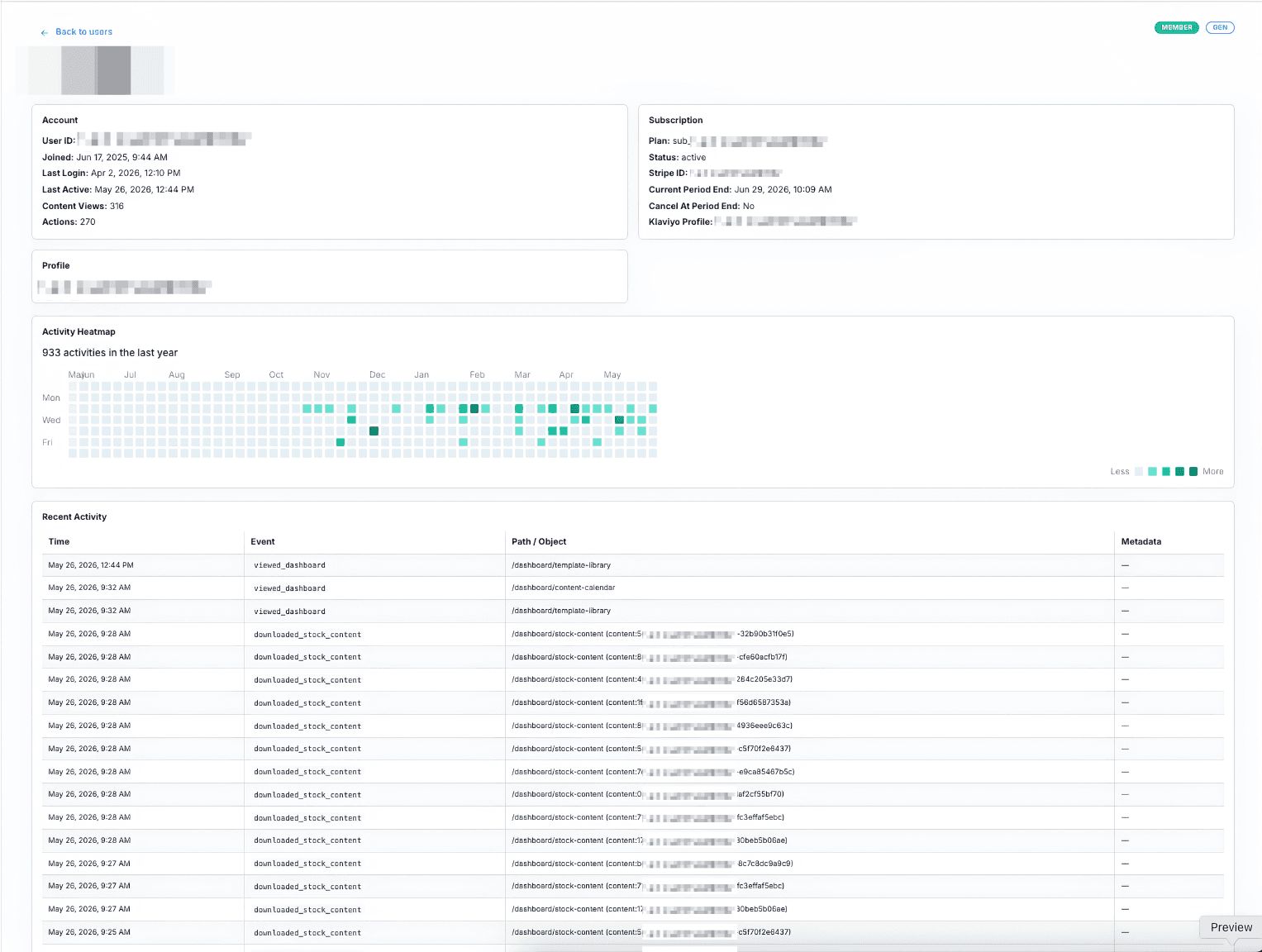
Every member gets a living profile with their plan, status, activity heatmap, and full event timeline, so the team can see exactly how power users, at-risk users, and free-tier users actually behave.
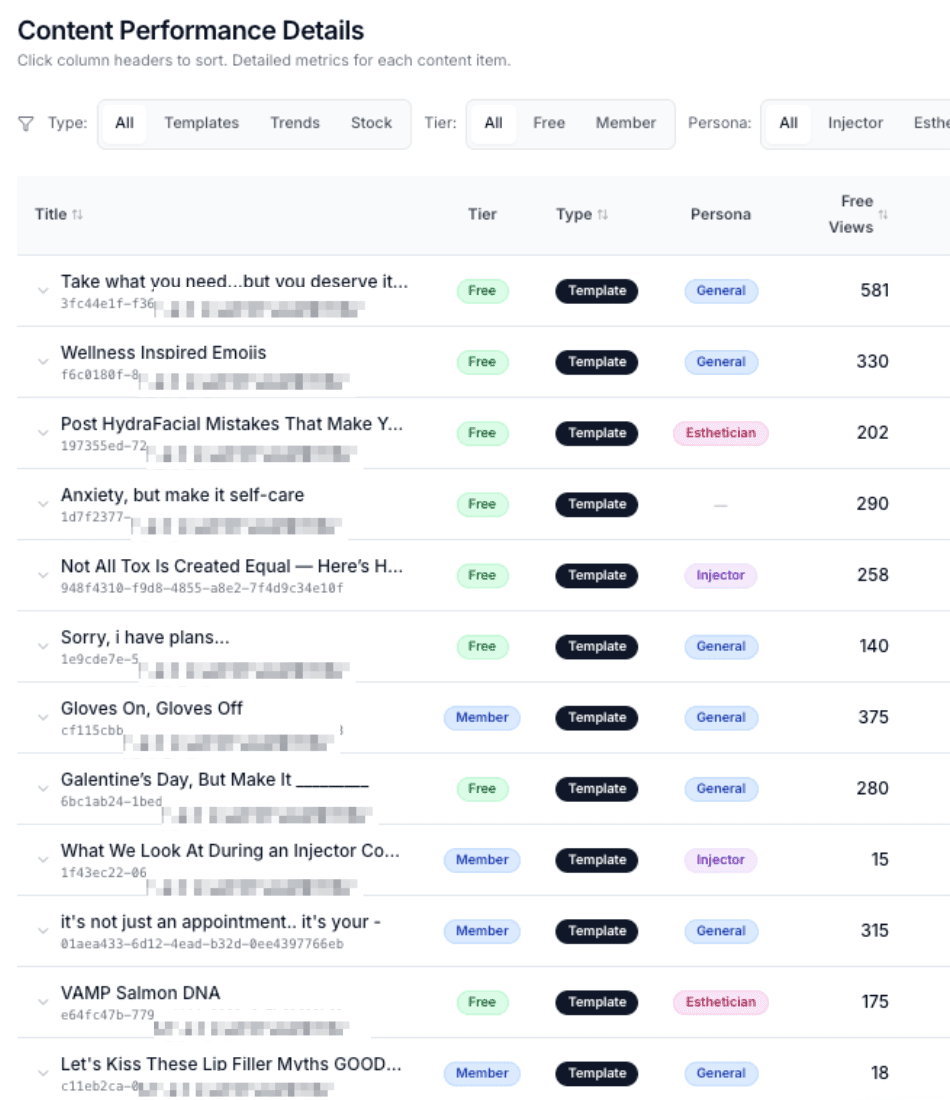
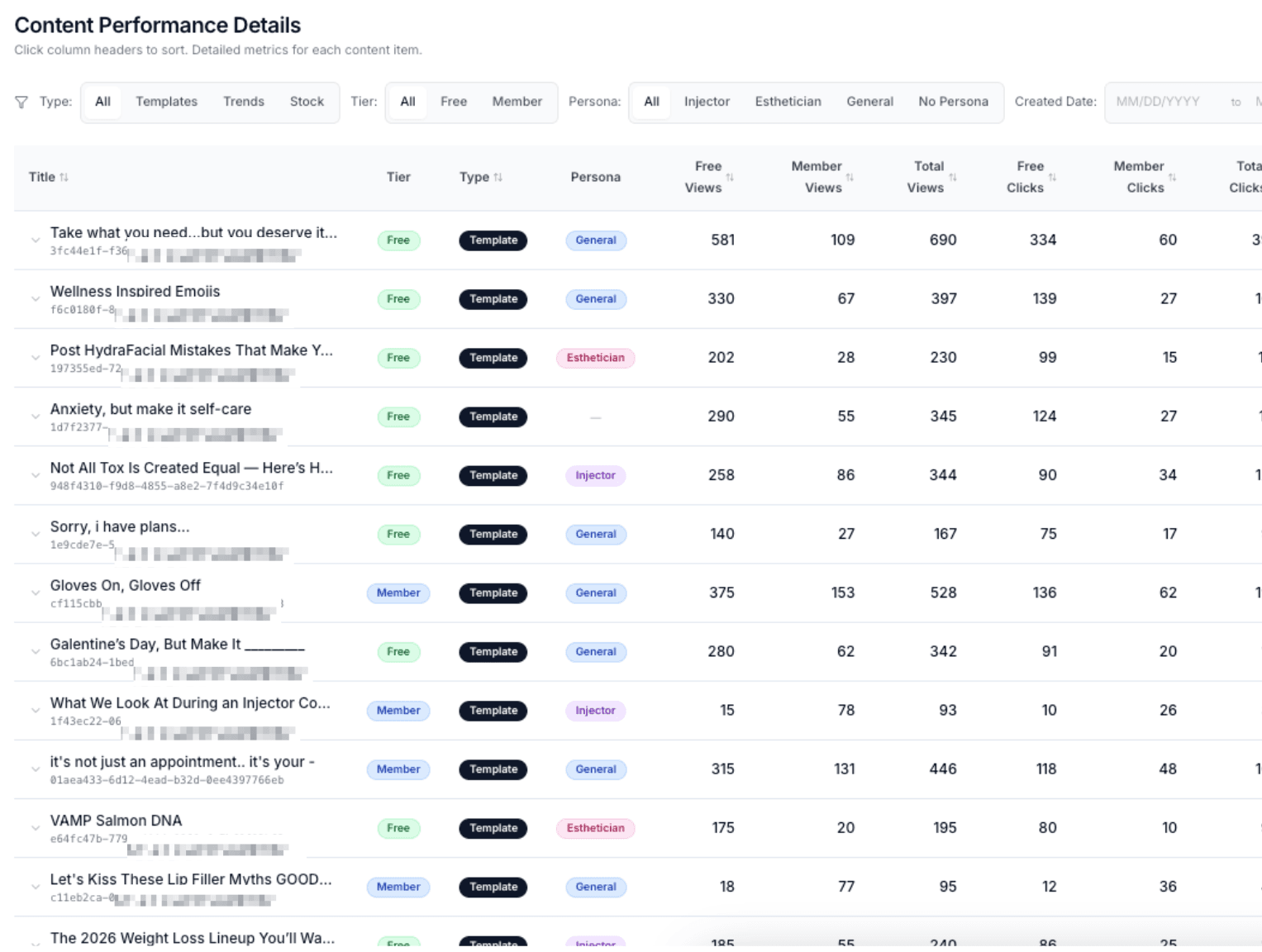
Content performance dashboards
Views, clicks, and downloads for every piece of content, sliceable by type, persona, and tier. Each monthly content drop becomes a measurable experiment.
AI trend agent
An agent that ingests usage trends from the platform and monitors what's performing on social channels in the wild, guiding the creative team's decisions about what to make next.
The churn curve bent within one quarter.
With the engine live, the creative team stopped guessing. They doubled down on the content members demonstrably wanted, cut what nobody used, and let the AI trend agent point each monthly drop at what was working, both on the platform and in the wild.
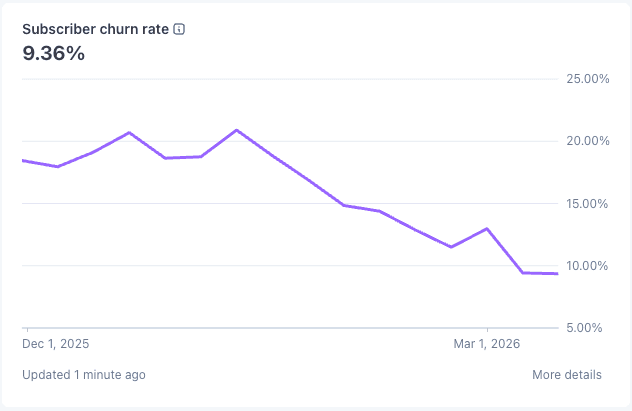
Subscriber churn fell from over 22% to 9%, a 59% reduction visible directly in the billing data.
Churn down 59%
Subscriber churn fell from over 22% to 9% as the team doubled down on the content members demonstrably wanted most, measured directly in billing data.
NPS from 14 to 51
More relevant content each month lifted satisfaction from a score that signals trouble to one that signals advocacy.
COGS down 30%
Contractor hours spent researching new content ideas dropped, because the data and the AI trend agent now do that research continuously.
Free-to-paid up 1.3%
A product built around what members actually use converted more free-tier users into paying subscribers.
Measurement note: churn and conversion are taken from the client's billing data. NPS was surveyed before and after the engagement. Cost of goods sold reflects reduced contractor hours spent researching new content ideas.
Three choices made the difference.
Telemetry in the product's own language
Generic analytics count page views. This engine counts template downloads, persona engagement, and content-type performance: the units the business actually makes decisions in. That's why the creative team could act on it immediately.
Dashboards built for the creative team
The audience wasn't engineers. It was the people deciding what content to make next month. Every dashboard answers one of the four questions they couldn't answer before, with no analyst in the loop.
Data turned into direction by AI
Collecting behavior is half the job. The AI trend agent closes the loop by combining what members use with what's performing in the wild, then turns that into direction for the next monthly drop.